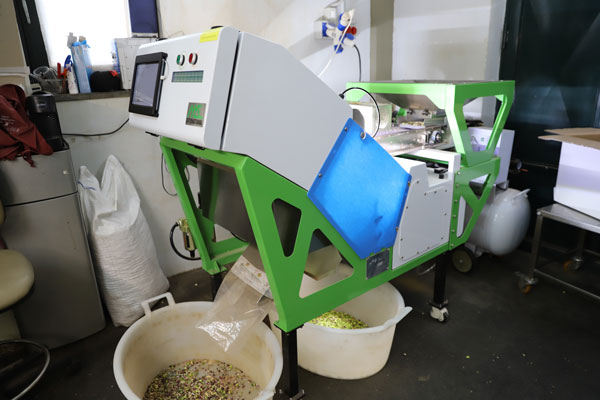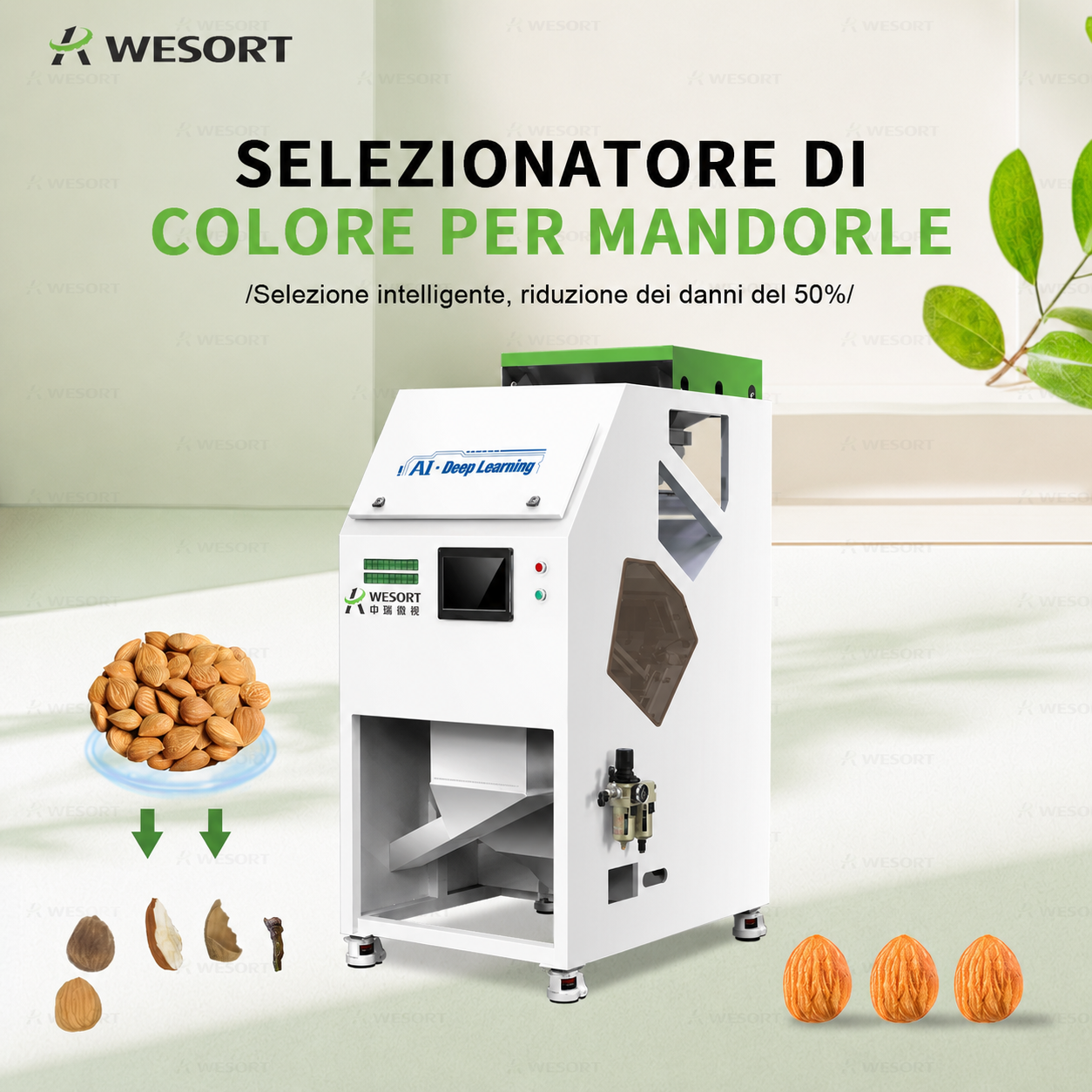

A rice sorting machine improves processed rice quality by inspecting individual grains and removing material that does not meet the mill’s acceptance standard. Depending on the raw material, machine configuration, and sorting program, an optical system can identify visible differences in color and shape, including yellow or dark grains, chalky grains, black grains, broken rice, paddy or rice husks, and selected foreign materials.
Better sorting is not simply about producing rice that looks cleaner. For a mill, more consistent finished product can reduce manual inspection, make quality control easier, support stable packaging specifications, and help protect buyer confidence. This guide explains where optical sorting adds value, what affects the result, and how a Colombian rice processor applied a five-chute WESORT system in daily production.
Why Processed Rice Quality Can Still Vary After Milling
Cleaning, destoning, husking, whitening, polishing, and grading each solve a different problem. Even after these mechanical stages, a batch may still contain grains with unwanted visible characteristics or pieces that resemble good rice in size and density. The exact mix changes with rice variety, harvesting conditions, storage, milling settings, and the percentage of impurities in the incoming material.
Typical quality concerns include:
- light-yellow, dark-yellow, black, or otherwise discolored grains;
- chalky rice and grains with visible surface differences;
- broken rice, short pieces, and irregularly shaped fragments;
- paddy, rice husks, and selected plant residues;
- stones, plastic, glass, or other foreign material when their visible characteristics can be distinguished from accepted rice.
No optical sorter should be expected to solve every upstream process problem. Destoners, screens, magnets, and other cleaning equipment remain important. The role of a rice color sorter is to provide a precise visual inspection stage after the material has been prepared and presented in a stable flow.
How an Optical Rice Sorting Machine Works
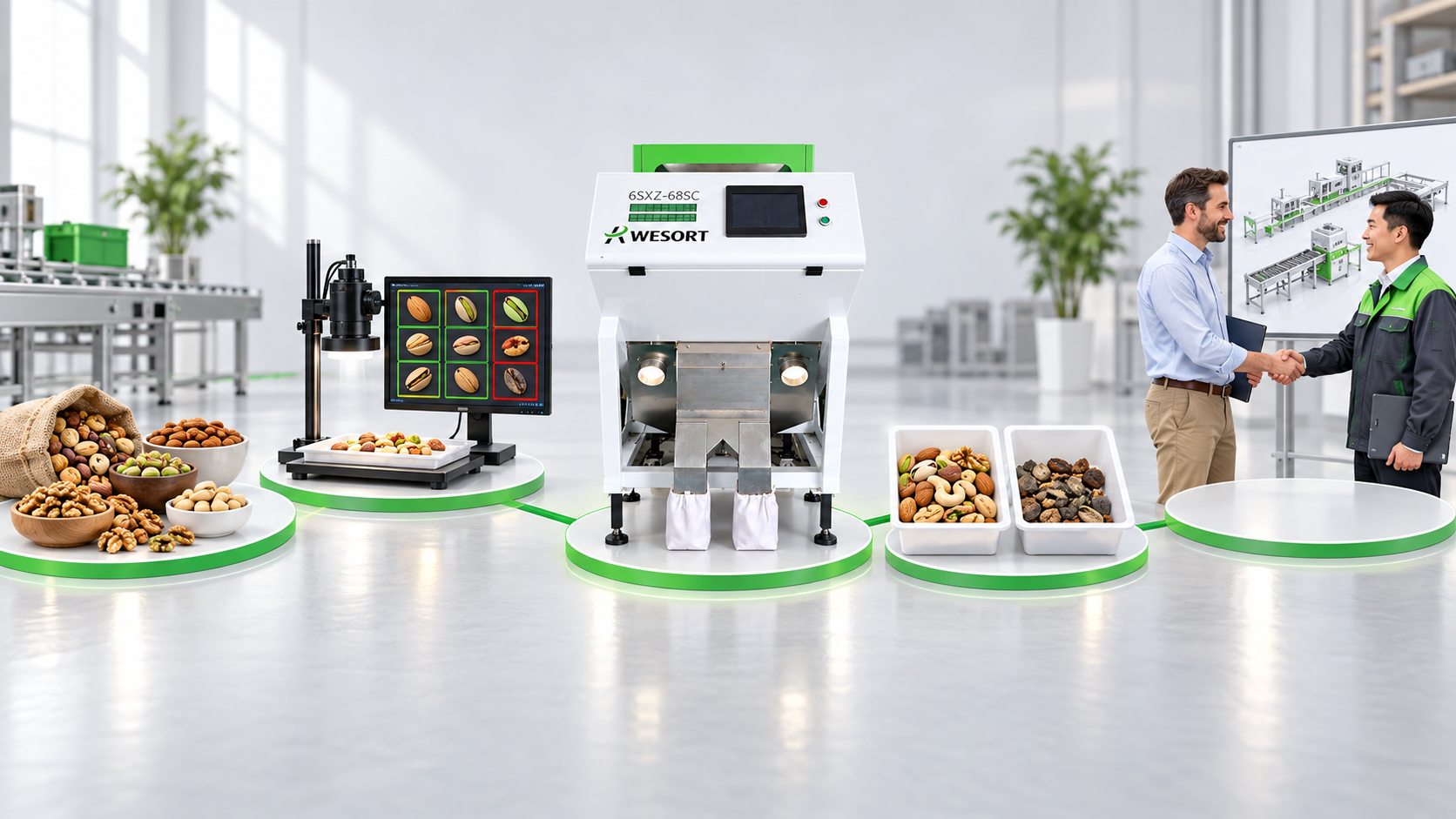
Rice enters the machine through a controlled feeding system and travels along the chutes in separated streams. Cameras and illumination systems capture the visible characteristics of the moving grains. The control system compares each image with the acceptance and rejection criteria configured for the product. When a target defect is detected, high-speed ejectors direct it into the reject outlet while accepted rice continues to the product outlet.
Color information is useful for separating discolored grains. Shape information helps distinguish broken rice, fragments, and other irregular material. Combining these inspection dimensions gives a processor more control than relying on a single color threshold. The program can also be adjusted when the rice variety, defect level, or finished-product specification changes.
Color sorting and shape sorting serve different purposes
| Inspection method | Typical sorting objective | Important condition |
|---|---|---|
| Color sorting | Separate light-yellow, dark-yellow, black, or other visibly different grains | The color difference must be visible and captured under the selected optical settings |
| Shape sorting | Separate broken rice, short pieces, fragments, or irregular shapes | The target shape must differ sufficiently from the accepted product standard |
| Combined sorting | Apply color and shape criteria in the same quality-control program | Settings should be developed with representative samples |
Where Should the Rice Color Sorter Be Installed?
In a typical rice processing line, optical sorting is placed after the major cleaning, milling, polishing, and physical grading stages and before final inspection and packaging. This position allows the machine to receive a more stable product stream and concentrate on the remaining visible defects. Some plants may add a re-sorting pass or use a different sequence according to their product grades and line design.
- Raw material reception and drying
- Cleaning, destoning, and paddy preparation
- Husking, paddy separation, whitening, and polishing
- Length or size grading
- Optical color and shape sorting
- Final verification, weighing, and packaging
The final installation point should be decided after reviewing the existing process. If excessive broken rice is being created during milling, for example, adjusting the mill is the first corrective action; the sorter can then separate the remaining broken fraction according to the required grade.
Customer Case: Five-Chute WESORT Rice Sorter in Colombia
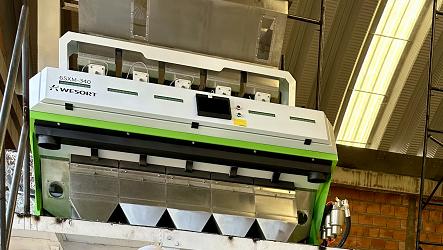
A rice processor in Colombia needed a more efficient way to remove rice husks, broken grains, and rice fragments from its processed product. These unwanted materials affected the uniform appearance of the rice and increased the effort required for daily quality control.
WESORT supplied a five-chute rice color sorter for the customer’s processing line. The sorting program was configured around the defects specifically identified by the customer. By using visible color and shape characteristics, the system separated the targeted husks, broken rice, and fragments while supporting continuous production.
“The sorting result is very good, and the efficiency is high. It has helped us solve the problems caused by rice husks, broken rice, and fragments. Our work is much easier now, and the quality of our rice has improved.”— Feedback from the Colombian customer, translated and edited for clarity
The customer also reported that the improvement in rice quality contributed to a better market reputation and higher income. These are the customer’s observations rather than guaranteed financial results. Commercial outcomes depend on each processor’s raw material, operating costs, quality targets, sales channels, and market conditions.
How to Choose the Right Rice Sorting Machine
The number of chutes is only one selection factor. WESORT offers different rice color sorter configurations, but a useful recommendation begins with the material and the finished-product standard. Before selecting a machine, a processor should define the following information:
- rice variety, grain size, moisture condition, and current processing stage;
- the specific defects and foreign materials that must be removed;
- the percentage and distribution of unwanted material in the incoming batch;
- required hourly throughput and operating schedule;
- acceptable carryover of good rice into the reject stream;
- the number of finished grades or sorting passes required;
- available power, compressed air, elevators, floor space, and dust-control conditions.
Published capacity and accuracy figures are reference values, not universal production guarantees. Actual performance varies with impurity level, moisture, feed stability, rice variety, defect contrast, selected program, and final acceptance standard. Testing representative samples is the most reliable way to define the appropriate configuration.
What Value Can Better Rice Sorting Create?
A well-configured rice sorting machine connects production control with commercial value. Cleaner and more uniform rice can help processors reduce repetitive manual inspection, maintain more consistent grades, respond to different buyer specifications, and reduce the risk of visible defects reaching the final package.
The greatest benefit is not a single advertised accuracy figure. It is the ability to define a quality standard, apply it consistently, and adjust the sorting program when the raw material or customer requirement changes. This makes optical sorting a practical quality-control tool for mills rather than an isolated piece of equipment.
Why Rice Processors Work with WESORT
Founded in 2012, WESORT develops and manufactures intelligent sorting equipment based on AI, machine vision, optical recognition, and deep-learning technologies. Its portfolio includes chute color sorters as well as specialized visible-light, infrared, and X-ray sorting solutions for agricultural and industrial materials.
For rice projects, WESORT starts with the customer’s material rather than a one-size-fits-all specification. The team reviews the target defects, capacity, quality standard, and line conditions, then recommends a suitable chute configuration and sorting route. Multilingual operating options, remote technical support, installation guidance, and operator training can be included according to the project.
Frequently Asked Questions
What can a rice sorting machine remove?
Depending on visible differences and the selected configuration, it can separate discolored grains, chalky grains, broken rice, irregular fragments, rice husks, paddy, and selected foreign materials. Representative sample testing is required to confirm each target.
Can a rice color sorter improve the quality of processed rice?
Yes. It can improve visual consistency and reduce the presence of configured visible defects after the upstream cleaning and milling stages. It should work as part of a complete quality-control process.
Does a larger number of chutes always mean a better result?
No. More chutes generally support a larger feed flow, but sorting quality also depends on material condition, impurity level, program settings, feed stability, and the required product standard.
Can WESORT test rice before a customer purchases a machine?
Yes. WESORT can provide a free material test. Customers can submit representative samples together with their target defects, required capacity, and finished-product standard so that the team can evaluate a suitable sorting solution.
Test Your Rice Before Selecting a Machine
Send WESORT representative rice samples, photographs or videos of the accepted and rejected material, your required capacity, and basic information about the existing line. Our team can conduct a free material test and prepare a rice sorting recommendation based on your actual product and quality objectives.