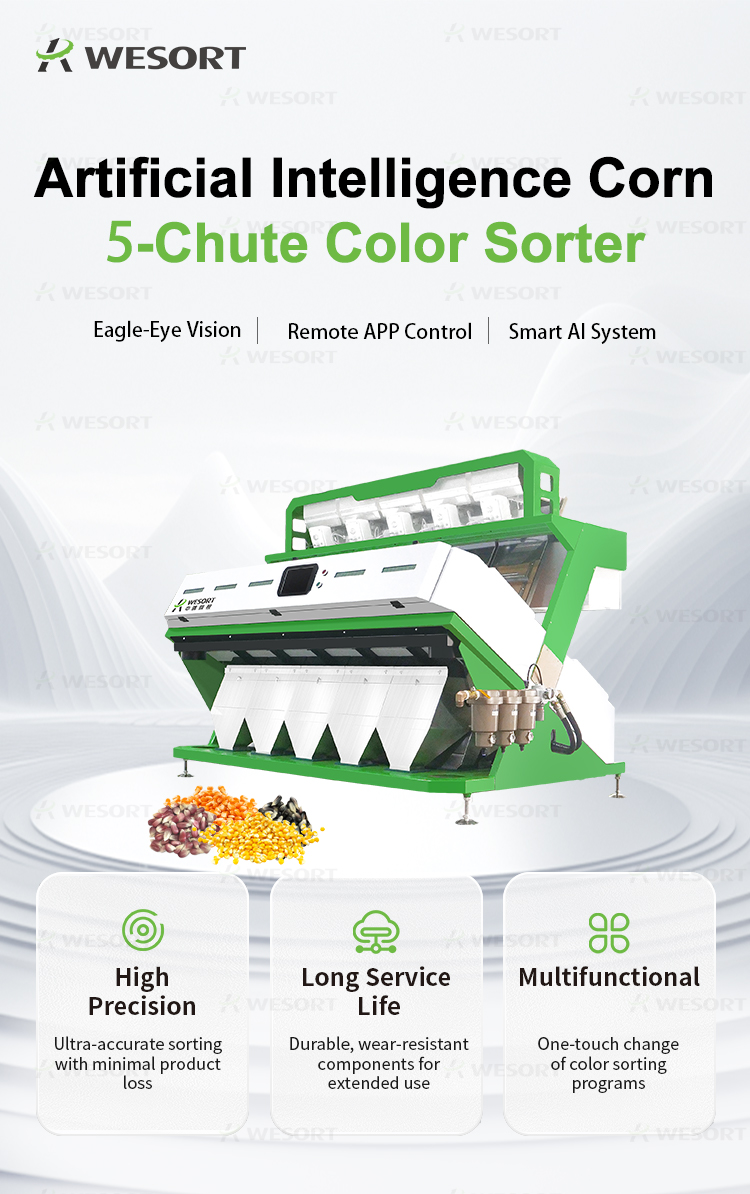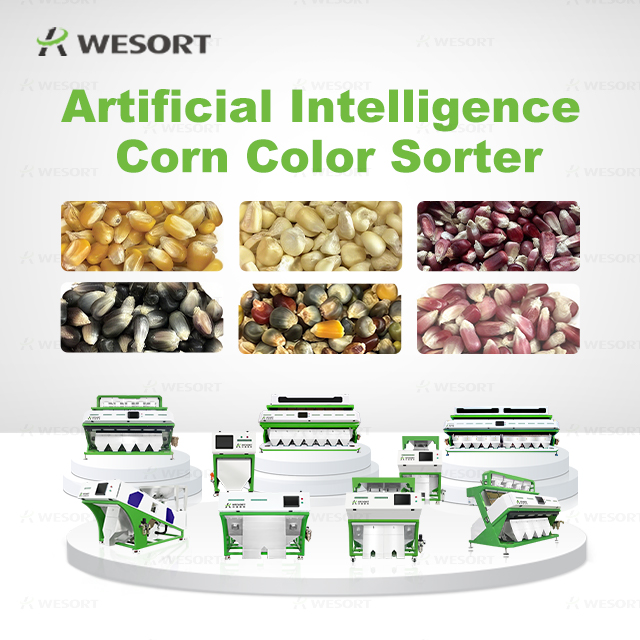

A corn sorting machine uses cameras, controlled lighting and image-processing software to inspect individual kernels. High-speed air ejectors then remove kernels and impurities that do not meet the programmed quality standard. In a modern grain plant, optical sorting does not replace mechanical cleaning, drying or laboratory testing. It adds a precise visual inspection stage before final storage, packing or downstream processing.
This technology is particularly useful when pre-cleaned corn still contains visibly moldy, insect-damaged, black-tipped, discolored, broken or immature kernels, as well as foreign material that affects batch uniformity. WESORT configures the optical system, number of channels and sorting program around the customer’s raw material, required throughput and target product quality.
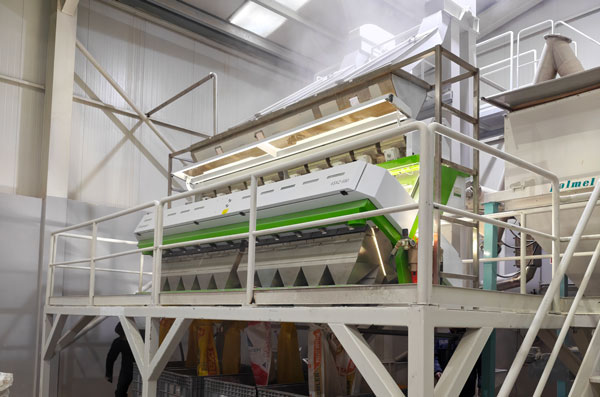
The Corn Quality Problem Is More Than a Difference in Color
Incoming corn can contain kernels in several different conditions. Some defects have a clear color contrast, while others are identified by their shape, size or visible surface damage. If they remain in the product, these kernels can reduce visual consistency, make buyer specifications harder to meet and increase the inspection work required later in the process.
Typical optical sorting targets include:
- dark, stained or differently colored kernels;
- visible mold spots and black tips;
- insect-damaged kernels when the damage is externally visible;
- immature, broken or misshapen kernels;
- pieces of cob, husk and plant debris;
- stones, plastic fragments and other visually distinguishable foreign material.
The rejection standard depends on the intended use. Food-grade corn, animal-feed ingredients and seed corn may have different acceptance criteria. An effective recipe must therefore be developed using the processor’s own samples instead of relying on one universal setting.
Where Should an Optical Sorter Be Installed in a Corn Processing Line?
Feed quality directly affects sorting performance. Excessive dust, unstable moisture or a high concentration of large impurities can obstruct the cameras and force the ejection system to perform work that should have been completed during pre-cleaning. For dry corn, a typical process sequence is:
- Receiving and sampling: measure moisture, impurity concentration and batch composition.
- Pre-cleaning: remove dust, straw and oversized foreign material through screening and aspiration.
- Destoning and magnetic separation: protect the line from stones and ferrous particles.
- Drying or conditioning: stabilize the corn before final sorting, depending on the process.
- Optical sorting: remove visible defects and foreign material defined in the active recipe.
- Accepted-product control: inspect samples, adjust settings and direct the lot to packing, storage or further processing.
Installing the corn sorting machine after effective pre-cleaning creates a more stable and visible product flow. This helps the processor balance two objectives that should always be measured together: final purity and the recovery of usable corn.
How Optical Corn Sorting Works
The process begins at the feeding system, where corn is distributed into a controlled, continuous flow toward the inspection zone. Stable feeding reduces overlapping material and gives the cameras a clearer view of individual kernels.
Inside the optical chamber, consistent lighting highlights differences in color and visible surface characteristics. Sensors capture images, while the software compares each object with the accepted and rejected criteria stored in the active program. The decision can combine color, shape, size and visible texture rather than relying on color alone.
When a non-conforming kernel is identified, high-speed valves deliver a precisely timed pulse of compressed air that redirects it into the reject outlet. Accepted kernels continue along their normal path. The process is automatic and continuous, but output sampling and operator verification remain essential.
The WESORT corn color sorter combines RGB cameras, LED lighting, image processing and intelligent algorithms for this purpose. Different channel configurations allow the solution to be matched to the plant’s capacity and quality objectives.
Color, Shape and Surface: Three Criteria That Work Together
A conventional color sorter can efficiently separate well-defined color differences. However, two kernels with a similar overall color may have different surface conditions. An insect hole, crack or small mold spot may also appear on only one side of a kernel. In these situations, the result depends on both the image-analysis program and the viewing angle.
A chute-based optical sorter is an efficient choice for standard color defects and visible impurities. When the quality specification includes small surface defects that may be hidden from a single view, WESORT can evaluate a multi-view inspection configuration. QuadEye technology observes the product from several angles to reduce blind areas during surface inspection.
This distinction matters. Multi-view optical technology improves coverage of the exterior, but it remains a surface-inspection system. It does not replace mycotoxin analysis or guarantee the detection of damage located entirely inside a kernel. If the project includes internal contaminants or foreign objects with little visible contrast, the processor should evaluate a complementary technology such as X-ray inspection and maintain the laboratory controls required by the destination market.
What Optical Sorting Changes in Daily Corn Processing
The main change is the ability to convert a visible quality specification into a repeatable operation. Instead of relying entirely on manual judgment, the processor defines which colors and surface characteristics should be rejected, saves the program and verifies the result through regular sampling.
A properly integrated corn sorting machine can support more uniform finished lots, reduce repetitive manual sorting, improve consistency across different buyer specifications and store programs for multiple corn varieties or grades. Actual improvement depends on product preparation, defect concentration, feed rate and the selected acceptance standard.
Optical sorting can also help reduce appearance-related complaints and prepare higher-value lots. The operator must, however, monitor usable kernels in the reject stream. An overly aggressive program may raise purity while unnecessarily discarding marketable corn. Effective sorting seeks the right balance rather than simply producing the largest possible reject volume.
WESORT Corn Sorting in Tanzania: Removing Visible Mold and Discolored Kernels
Field experience provides practical context for the technology. In a WESORT corn application in Tanzania, the customer reported that the machine separated visibly moldy and differently colored kernels with ease. The customer also expressed satisfaction with both the sorting result and the service received.
“Moldy and differently colored kernels are easily separated. The sorting result and service are very good, and I am very happy that I chose WESORT.”— WESORT corn customer in Tanzania
This is a relevant operating example, but its result should not be treated as a universal performance figure. Every plant must validate sorting with its own corn variety, moisture level, defect profile, required throughput and final-product standard.
How to Specify the Right Machine for a Corn Plant
Selecting equipment only by channel count or a catalogue capacity can lead to the wrong configuration. Effective throughput changes with kernel size, incoming impurity level, defect difficulty, number of sorting passes and the purity required by the buyer.
Before requesting a proposal, prepare the following information:
- corn type, variety and intended use;
- separate photos and samples of accepted and rejected material;
- a prioritized defect list and allowable tolerance;
- required hourly capacity under normal production conditions;
- estimated impurity concentration in the incoming product;
- moisture level and details of the upstream cleaning process;
- available installation space, electrical supply and compressed-air capacity;
- whether the process requires one pass, re-sorting or separation into several grades.
WESORT offers different capacities within its range of optical grain sorting machines. Instead of assigning a model from theoretical tonnage alone, the technical team can review samples, buyer specifications and site conditions before recommending a solution.
WESORT: From a Corn Sample to a Verifiable Sorting Solution
WESORT develops optical sorting systems for corn, wheat, rice, quinoa, barley and other grains. A corn project starts with three practical questions: what should remain in the accepted product, what must be removed and how much usable corn the processor needs to recover.
During a material test, WESORT prepares a recipe using representative samples, inspects both the accepted and rejected outputs and adjusts the settings. The test helps determine whether a conventional corn sorting machine meets the objective or whether the plant should consider multi-view inspection or another complementary technology.
Once the equipment is selected, commissioning should include operator training, recipe storage and a routine output-control method. WESORT also provides remote assistance for adjustments and troubleshooting, helping customers respond when raw-material conditions or buyer specifications change.
Request a Free Test with Your Own Corn
The most reliable way to evaluate a corn sorting machine is to test it with material that represents actual production. WESORT can provide a free material test using accepted corn, defective kernels and representative impurities, then prepare a recommendation based on the observed result.
Review the WESORT corn sorting machine, explore its grain color sorter solutions, or contact WESORT with your required capacity and quality targets.